
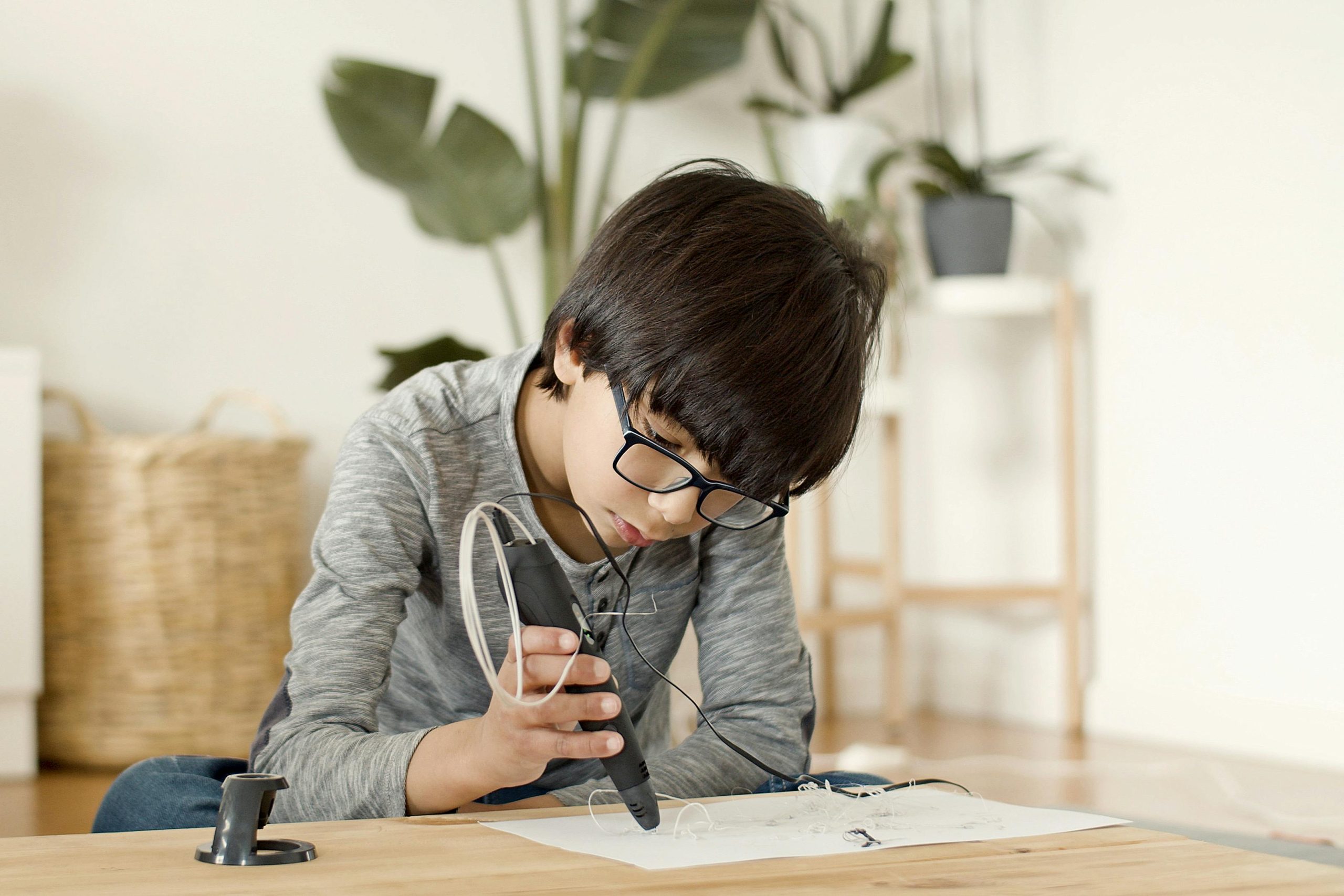
Have you ever wanted to draw in three dimensions and bring your imagination to life? 3D printing pens transform creative ideas into tangible art, offering unlimited possibilities for artists, hobbyists, and children alike. According to Grand View Research, the global 3D pen market is projected to reach $2.8 billion by 2025, growing at 15.2% annually. Discover how these innovative tools can revolutionize your creative projects today.
Understanding 3D Pen Technology and Its Creative Potential
A 3D pen functions like a handheld 3D printer, heating plastic filament to approximately 180-210°C before extruding it through a precision nozzle. The melted material cools rapidly upon contact with air, allowing you to draw three-dimensional structures directly in space. This revolutionary approach eliminates the need for complex software or printing beds.
This might interest you : How is the UK government managing immigration policies?
Two primary technologies dominate the market: thermal extrusion pens that heat PLA or ABS filaments, and photopolymer pens that use UV-curing resins. Most consumer models feature adjustable temperature controls and variable speed settings, making them suitable for intricate detail work or bold architectural projects.
The beauty of 3D pen technology lies in its universal accessibility. Children can safely create colorful artwork with low-temperature PLA models, while professional artists achieve museum-quality sculptures using advanced temperature-controlled devices. The learning curve remains remarkably gentle – most users create recognizable objects within their first hour of use.
This might interest you : How is artificial intelligence influencing UK newsrooms?
Modern 3D pens have evolved far beyond simple drawing tools. They enable rapid prototyping, jewelry making, architectural modeling, and even practical repairs around the home. This versatility transforms abstract ideas into tangible creations, bridging the gap between digital imagination and physical reality.
Key Features to Consider When Choosing the Right 3D Drawing Pen
Choosing the right 3D drawing pen requires careful attention to several key features that directly impact your creative experience. Whether you’re shopping for a child’s first pen or a professional tool, these criteria will guide your decision.
- Temperature control ensures compatibility with different filament types. Adjustable settings benefit experienced users who work with various materials, while fixed temperatures suit beginners who prefer simplicity and safety.
- Filament compatibility determines your creative possibilities. Pens supporting both PLA and ABS offer versatility for advanced projects, while PLA-only models provide safer, odorless operation ideal for children and indoor use.
- Ergonomic design prevents hand fatigue during extended sessions. Lightweight pens with comfortable grips suit younger users, while slightly heavier models often provide better control for detailed professional work.
- Safety features like auto-shutoff and cool tips are essential for children’s models. Professional users may prioritize precise temperature displays and quick heating capabilities over extensive safety mechanisms.
- Extrusion speed control allows fine-tuning for different techniques. Variable speeds help beginners learn control, while experienced artists appreciate precision for intricate details.
These features work together to match each pen’s capabilities with your specific needs and skill level.
Professional vs Budget-Friendly Options: Finding Your Perfect Match
Today’s 3D pen market offers solutions to suit every budget and level of expertise. Professional models, generally priced in the higher range of $30 to $50, offer advanced features such as precise temperature control, informative LCD screens, and ergonomic designs for long creative sessions.
Conversely, budget-friendly options start at around $15 to $25 and are ideal for beginners or occasional use. These models prioritize ease of use with intuitive controls, while retaining the essential features for creating your first 3D works.
To choose the right model, consider how often you will use it and your creative goals. A professional artist will prefer the precision and durability of a high-end model, while a parent looking for a fun activity for their children will find what they are looking for in affordable options that do not compromise on safety and ease of use.
Age-Appropriate Solutions: From Kids to Adult Artists
Choosing the right 3D pen depends entirely on who will be using it. Children need maximum safety and ease of use, while professional artists are looking for precision and advanced features.
For young creators, choose models with automatic temperature control and low-temperature filaments. These pens eliminate the risk of burns while remaining powerful enough to complete creative projects. The interface should be intuitive, with large buttons and an ergonomic grip suitable for small hands.
Adult beginners benefit more from the versatility of the settings. An LCD screen for controlling speed and temperature allows you to experiment with different filaments. These intermediate models offer an excellent balance between ease of use and extensive creative possibilities.
Experienced artists demand millimeter precision and professional features. Fine extrusion control, multi-filament compatibility, and robust construction are essential for creating complex and durable works.
Mastering These Tools: How to Use a 3D Modeling Pen Effectively
Starting with a 3D pen requires proper preparation to ensure smooth operation and quality results. Set up your workspace on a flat, stable surface with adequate lighting and ventilation. Keep your chosen filament within easy reach and have a damp cloth nearby for quick pen cleaning. Most importantly, allow your pen to reach the optimal temperature before beginning any project.
Temperature control forms the foundation of successful 3D pen usage. Different filament materials require specific heat settings, typically ranging from 160°C for PLA to 210°C for ABS. Start with lower temperatures and gradually increase until the filament flows smoothly without clogging. This approach prevents overheating and extends your pen’s lifespan significantly.
Building stable structures demands patience and proper technique. Begin with simple 2D shapes on paper before attempting 3D objects. Draw slowly and maintain consistent speed to ensure uniform thickness. For vertical elements, create a solid base first, then build upward in small sections, allowing each layer to cool briefly before adding the next.
Common beginner mistakes include rushing the process and ignoring proper maintenance. Clean your pen’s nozzle regularly to prevent blockages, and never force filament through the mechanism. With practice and the right techniques, even budget-friendly models can produce impressive results.
Materials and Maintenance: Maximizing Your Investment
The filament you choose dramatically impacts your creative results. PLA filament remains the gold standard for beginners, offering excellent adhesion at lower temperatures while producing minimal odor. Its biodegradable nature and vibrant color options make it perfect for educational projects and artistic creations.
ABS filament delivers superior durability for functional objects, though it requires higher operating temperatures and better ventilation. PETG strikes an ideal balance between PLA’s ease of use and ABS’s strength, making it increasingly popular among experienced users who demand both quality and versatility in their projects.
Proper maintenance extends your pen’s lifespan significantly. Regular cleaning prevents filament buildup that can cause jams, while storing your device in a dust-free environment protects delicate heating elements. Quality materials from reputable suppliers ensure consistent flow and reduce mechanical stress on your pen’s internal components, ultimately protecting your investment for years of creative exploration.
Your Questions About 3D Pens Answered
What is the best 3D pen for beginners and kids?
Entry-level models with safety features and temperature control work best. Look for lightweight designs with simple controls and LCD displays for easy monitoring.
How much do 3D printing pens cost and are they worth it?
Quality 3D pens range from £10 to £50. They’re worth it for creative projects, education, and prototyping, offering excellent value for artistic expression.
What type of filament works best with 3D pens?
PLA filament is ideal for beginners due to its low melting point and minimal odor. ABS offers more durability for advanced projects requiring flexibility.
Can adults use 3D pens for professional art projects?
Absolutely. Professional artists use high-end 3D pens for sculptures, prototypes, and architectural models. Advanced temperature control enables precise detail work and complex designs.
What’s the difference between cheap and expensive 3D pens?
Premium models offer better temperature precision, ergonomic design, variable speed control, and consistent filament flow. Budget options may lack these refinements but still enable creativity.